


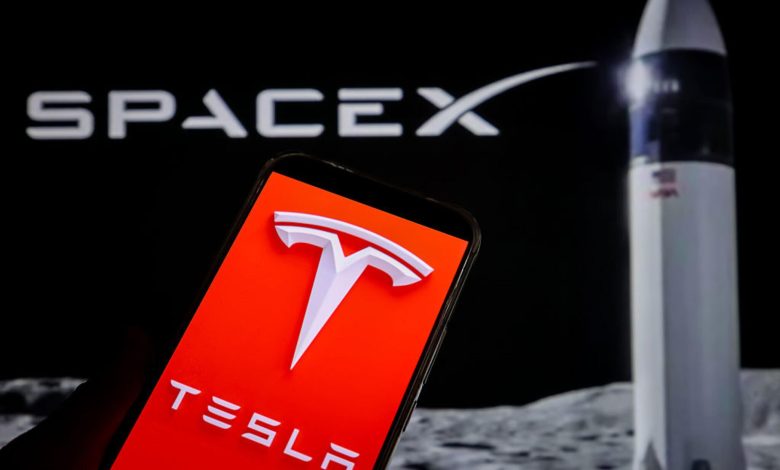
Speculation is mounting across global financial markets over a potential merger between Tesla and SpaceX, the two companies led by billionaire Elon Musk. A deal could bring their combined valuation to approximately $3.5 trillion, creating one of the world’s largest technology groups.
According to reports, the proposed combination would unite Tesla’s expertise in electric vehicles, robotics and artificial intelligence with SpaceX’s capabilities in rocket launches, satellite communications and its Starlink broadband network.
Such a merger could strengthen coordination across the companies’ technological development and investment strategies. However, significant questions remain over valuation, corporate governance, shareholder interests and the feasibility of integrating their operations.
Growing Investor Interest
Barclays analysts have highlighted the possibility of a merger announcement ahead of Tesla’s annual shareholder meeting as a scenario attracting investor attention.
Analyst Dan Levy has suggested that the companies could pursue a preliminary agreement before the meeting, reflecting the potential economic advantages of bringing their businesses under a single corporate structure.
Nevertheless, market expectations should not be mistaken for confirmation of a completed agreement. Any transaction would depend on negotiations between the parties, an assessment of its financial and strategic merits, and the necessary shareholder and regulatory approvals.
The Strategic Rationale
The potential merger’s rationale extends beyond cost savings. Combining the companies could facilitate closer coordination in artificial intelligence, semiconductor development, energy infrastructure and advanced communications technologies.
Tesla has been expanding its focus on electric vehicles, batteries, autonomous driving and robotics, while SpaceX specialises in space transportation and satellite-based connectivity. Both companies have strategic interests in the computing hardware and energy systems needed to support increasingly sophisticated AI applications.
A unified corporate structure could help coordinate large-scale investments and streamline the development of complementary technologies. It could also create opportunities to connect Tesla’s products and services with SpaceX’s satellite communications infrastructure.
However, the scale of these potential benefits would depend on the transaction’s structure, the allocation of capital and the commercial viability of the projects involved.
A Potential $3.5 Trillion Corporate Giant
Estimates cited in market reports place SpaceX’s valuation at more than $2 trillion, while Tesla’s market capitalization stands at approximately $1.5 trillion. Together, the companies could therefore be valued at more than $3.5 trillion.
If completed, the merger would create a technology group with interests spanning electric mobility, robotics, space transportation and satellite communications, potentially placing it among the world’s largest companies by valuation.
The prospect has attracted attention from investors because of the companies’ positions in strategically important and rapidly evolving industries. However, their combined standalone valuations would not necessarily translate directly into the market value of the merged entity.
The final valuation would depend on the terms of the transaction, the exchange ratio, any premium offered to shareholders, financing arrangements and prevailing market conditions.
Artificial Intelligence and Robotics at the Heart of the Deal
Artificial intelligence and robotics could represent important strategic drivers of a potential merger.
Tesla’s work on autonomous driving, humanoid robots and AI-powered systems could complement SpaceX’s satellite infrastructure and its broader ambitions in advanced computing. Their overlapping interests in semiconductor technology could also create opportunities to coordinate investment in the hardware required to support increasingly complex AI applications.
The companies’ interest in expanding semiconductor production, including through the proposed Terafab initiative, highlights the strategic importance of computing infrastructure to their long-term plans. A merger could potentially streamline decision-making and investment across these projects, although the extent of any benefits would depend on implementation and commercial priorities.
SpaceX’s Starlink network could also provide connectivity capabilities relevant to future digital services and connected systems. Any direct integration with Tesla products, however, would depend on technical feasibility, commercial decisions and applicable regulatory requirements.
Investor Expectations and Execution Challenges
Barclays has issued investment assessments of SpaceX based on its position in the rocket-launch market and the expansion of Starlink’s broadband services. Such assessments reflect analysts’ expectations for the company’s prospects; they do not, in themselves, establish that a merger will take place.
A potential transaction would face several challenges, including determining the appropriate valuation of each business, negotiating the terms of any share exchange, securing regulatory approvals and obtaining the necessary shareholder consent.
Corporate governance would also be a central consideration, given Musk’s leadership roles and financial interests across both companies. Investors would need clarity on how the transaction would be negotiated, how competing shareholder interests would be addressed and how capital would be allocated across the merged business.
The structure of the deal would be particularly important in determining whether the proposed combination creates lasting value for shareholders or introduces additional financial and operational risks.
A Transformative Possibility, Not Yet a Done Deal
A Tesla–SpaceX merger would mark a significant development at the intersection of automotive technology, aerospace, satellite communications and artificial intelligence. By bringing together two businesses with substantial technological capabilities and investment ambitions, the deal could reshape how resources are deployed across several advanced industries.
For now, however, a combined valuation exceeding $3.5 trillion remains a potential outcome rather than an established fact. The transaction’s prospects will ultimately depend on whether the companies reach a formal agreement, on the terms they negotiate, and on their ability to secure the approvals required to complete the deal.
Related Topics:
Eric Schmidt: From Leading Google to Shaping the Future of Artificial Intelligence
Types of jobs at risk of being replaced by Artificial Intelligence
Elon Musk Launches Grok 3: World’s Smartest AI Merges with Blockchain to Disrupt Crypto Sector