

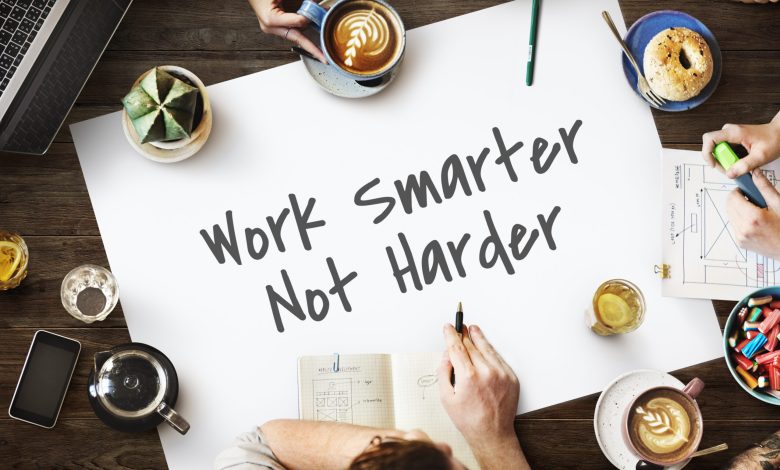
For decades, the modern workplace has celebrated long hours as a symbol of ambition. Staying late, answering messages after hours and filling every available minute with work are often treated as evidence of commitment.
But Alex Soojung-Kim Pang’s Rest: Why You Get More Done When You Work Less challenges that assumption, arguing that constant work is not necessarily a path to greater achievement.
Instead, Pang presents rest as a productive activity in its own right. His central argument is that people perform at their best when periods of intense concentration are deliberately balanced with recovery, allowing the mind and body to replenish their resources.
The result is a different approach to productivity — one that measures success by the quality of work rather than the number of hours spent doing it.
Why More Work Does Not Always Mean More Results
Modern professional culture often creates the impression that taking time away from work means falling behind.
Yet working continuously can eventually undermine the very abilities that make people effective. Fatigue reduces concentration, weakens judgment and makes it harder to generate new ideas.
Pang challenges the belief that rest is something people earn only after completing their responsibilities. Instead, he argues that recovery should be built into the structure of the working day.
This does not mean abandoning ambition or reducing effort. It means recognizing that human attention and creativity are limited resources and need time to recover.
A Different View of High Achievers
Some of history’s most productive thinkers and creative figures did not spend every waking hour working.
Pang examines the routines of accomplished writers, scientists, artists and other professionals who deliberately restricted their periods of intensive work and protected substantial amounts of time for activities outside their professions.
Their routines often included walking, exercising, reading, taking vacations or simply spending time away from their desks.
These habits challenge the modern assumption that extraordinary achievement requires extraordinary working hours.
In many cases, the opposite may be closer to the truth: protecting time away from work can help people make better use of the time they actually spend working.
What Happens When We Step Away
Rest may look like inactivity from the outside, but the brain does not simply switch off when a person stops working.
During periods of relaxation, the mind continues processing information, organizing memories and making connections between ideas.
This is one reason people sometimes arrive at solutions to difficult problems while walking, exercising, showering or doing something completely unrelated to their work.
Stepping away can create the mental distance needed to approach a problem differently.
For creative professionals in particular, this can be extremely valuable. A mind that is constantly focused on one problem may become trapped within the same assumptions, while a period of disengagement can allow new possibilities to emerge.
Deep Work Needs Boundaries
One of the book’s most important ideas is that productive work does not have to occupy an entire day.
Instead, people can divide their time into periods of concentrated effort followed by deliberate recovery.
Historical examples suggest that several hours of genuinely focused intellectual work can be more valuable than an entire day of distracted effort.
The objective is not to remain busy from morning until night, but to protect the periods when concentration is at its highest and use them for the tasks that matter most.
Once that period ends, stepping away is not necessarily a sign of reduced commitment. It can be what allows the next period of focused work to remain effective.
Rest Comes in Many Forms
Sleep is obviously one of the most important forms of recovery, but Pang’s definition of rest extends well beyond the bedroom.
Physical activity, walking, meditation, hobbies, time in nature and social activities can all provide distance from professional demands.
These activities allow people to change their mental environment rather than remaining locked into the same pattern of concentration.
Even short breaks can have value when they are used intentionally rather than filled with another stream of emails, notifications and digital distractions.
The quality of the break matters as much as its duration.
The Case for the Power Nap
The book also explores the potential benefits of napping as a way to restore alertness and mental energy.
For people dealing with demanding cognitive workloads, a short nap can provide an opportunity to recover before returning to important tasks.
Rather than viewing sleep during the day as laziness, Pang presents it as one of several tools that can help people maintain performance.
The broader lesson is that productivity should be designed around the way human beings actually function, rather than around an unrealistic expectation of uninterrupted concentration.
Knowing When to Stop
Another important principle is learning to end a work session before mental exhaustion takes over.
Pang points to Ernest Hemingway’s approach to writing as an example. Rather than continuing until he had completely exhausted his ideas, Hemingway would sometimes stop while he still knew what he wanted to write next.
That made returning to the work easier.
The technique also illustrates a broader psychological principle: stopping at the right moment can prevent creative exhaustion and leave the mind with a clear path forward.
In other words, finishing everything today is not always the most productive choice.
A More Sustainable Definition of Success
The modern obsession with productivity often turns busyness into a measure of personal value. Long working days can become a badge of honor, even when they produce exhaustion rather than meaningful progress.
Pang offers a different model.
The goal is not simply to work fewer hours, but to create a sustainable cycle of concentration, recovery and renewal.
That means protecting time for deep work, taking breaks before exhaustion sets in, sleeping properly, staying physically active and allowing the mind periods in which it is free from professional demands.
The Productivity Lesson
The biggest idea behind Rest is simple: rest is not the opposite of productivity — it is one of its foundations.
People who learn how to disconnect deliberately may ultimately be better equipped to concentrate when they return to work.
In an environment where being constantly available is increasingly mistaken for being productive, the ability to step away may become a competitive advantage.
The most effective workers are not necessarily those who spend the longest hours at their desks. They may be the ones who understand when to push themselves, when to pause and how to return with renewed energy.
Working harder has limits. Learning how to recover may be what allows great work to continue.
Related Topics:
10 Daily Habits of the Most Productive Entrepreneurs
Wealth Doesn’t Start with an Inheritance, It Starts with 8 Daily Habits