

Inside xAI’s Ambitious Race to Build Machines That Understand the World

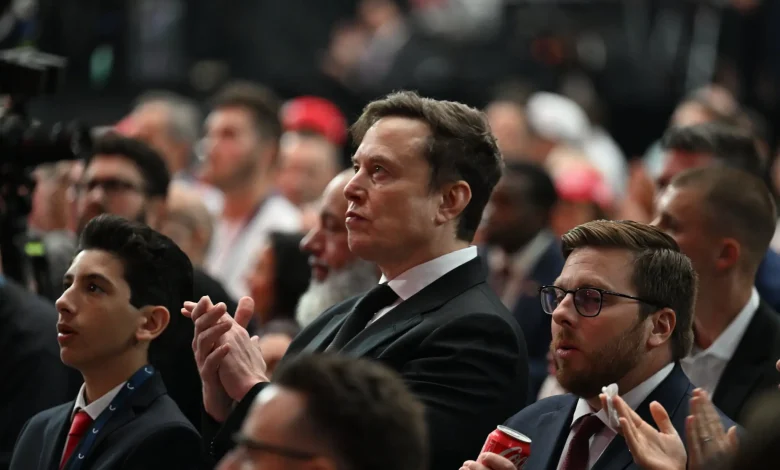
Elon Musk’s xAI is stepping into the highly competitive “world models” space, joining major players such as Meta and Google in developing AI systems designed to do more than understand language; they aim to comprehend the world itself.
By creating interactive environments and powering AI-driven humanoid robots, xAI is placing its bets on a new frontier of artificial intelligence that extends well beyond text.
What Are World Models?
Unlike traditional large language models (LLMs) that power tools such as ChatGPT and Grok, world models are designed to understand the physical world: how objects interact, how environments evolve over time, and how actions lead to consequences in real-world settings.
Trained on video footage and robotics data, these models aim to equip AI with an intuitive understanding of cause and effect, physics, and spatial relationships.
According to the Financial Times, xAI is making use of world models to develop immersive 3D environments for video games, giving players AI-generated worlds that are dynamic, interactive, and realistic.
This marks a remarkable shift from AI functioning solely as a digital assistant toward AI serving as a creative co-designer of experiences.
Talent and Technology
To further accelerate its vision, xAI has brought in AI researchers from Nvidia, including Zishan Patel and Ethan He, who have experience with Nvidia’s Omniverse platform, a leading tool for creating and simulating virtual environments.
The appointments represent an integral part of xAI’s broader push to bridge virtual simulation with real-world understanding, with the long-term aim of developing AI capable of navigating and designing environments similar to those created for humans.
More boldly, Musk recently revealed on X (formerly Twitter) that xAI gears up to launch an AI-generated game before the end of next year, reflecting the company’s ambitious objective to position AI as a direct contributor to entertainment and gaming.
Beyond Gaming: AI in the Physical World
World models extend beyond virtual entertainment.
Several technology companies envision deploying them to power humanoid robots and other AI-driven physical systems, where understanding cause and effect in the real world is crucial.
Current video generation models, such as OpenAI’s Sora, operate by predicting sequences of frames based on training data.
World models, by contrast, provide causal reasoning, allowing AI to develop a deeper understanding of how objects move, collide, and interact over time. This capability could transform simulation, robotics, and human-computer interaction.
xAI’s Open Roles Signal Ambitious Plans
xAI is actively recruiting top talent in AI-generated imagery and video, with annual salaries ranging from $180,000 to $440,000.
The company is also looking for a video game instructor to train its AI, Grok, in game design and user engagement, with these positions offering between $45 and $100 per hour.
These openings perfectly mirror xAI’s dual focus: advancing technical capabilities while incorporating human creativity and oversight into AI-generated content.
The Challenges Ahead
World models are technically complex and highly data-intensive. Accurately simulating a real-world environment requires massive datasets and substantial computational resources, making the field fiercely competitive.
Michael Douse, head of publishing at Larian Studios, the developers of Baldur’s Gate 3, wrote on X that AI has yet to solve the “biggest problem” in gaming: vision and direction.
For Douse, the industry needs more than mathematically optimized gameplay cycles; it needs worlds that players are compelled to explore and interact with.
For xAI, the challenge will be to strike a balance between AI efficiency and authentic, engaging, and creative gaming experiences.
Why This Matters
- Gaming Innovation: AI could transform game design by creating dynamic worlds that respond to players’ actions.
- Simulation and Robotics: A deeper understanding of real-world physics and interactions is critical for humanoid robots and automated systems.
- Cross-Industry Impact: From entertainment to autonomous systems, world models could reshape how AI interacts with virtual and physical environments.
As xAI competes with technology giants such as Meta and Google, the race to develop world models could reshape AI’s role across entertainment, robotics, and beyond.
For Elon Musk, the message is clear: the next generation of AI will not simply be intelligent; it will be aware of the world it inhabits.
Related Topics:
Elon Musk Launches Grok 3: World’s Smartest AI Merges with Blockchain to Disrupt Crypto Sector
Eric Schmidt: From Leading Google to Shaping the Future of Artificial Intelligence
Elon Musk’s Net Worth Approaches Half a Trillion Dollars: Secrets Behind His Historic Rise